




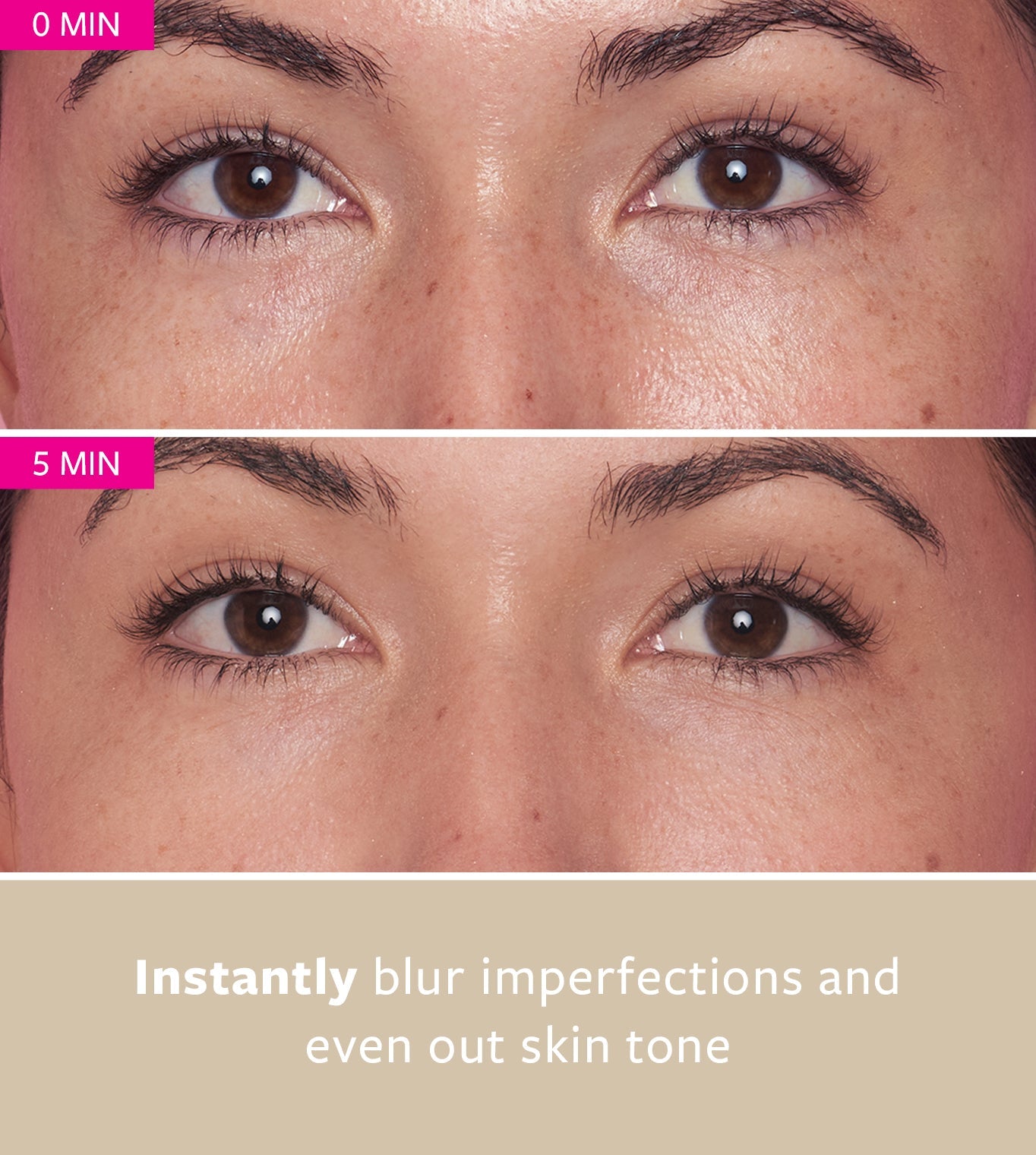




Our exosomes just won K-Beauty Gold
Instant Exosome Lift technology has won the K-Beauty Standout Award at in-cosmetics- the industry's most prestigious ingredients award - plus 6 other industry recognition awards. Seven wins for one formula. Did anyone say A-Beauty?
It's the kind of recognition that makes us want to shout it from the rooftops. But it also felt like the right moment to properly explain what exosomes are, why they're such a breakthrough, and - since it's one of the most-searched skincare questions right now - how they actually compare to PDRN, the other regenerative ingredient everyone's suddenly talking about.
What Are Exosomes?
Exosomes are tiny messengers your cells use to signal repair and renewal. Technically, they're extracellular vesicles — nanosized particles released by cells that carry proteins, growth factors, and signaling molecules to other cells, instructing them to regenerate and repair.
They do two things at once. First, they act as couriers — carrying other active ingredients into skin cells more effectively. Second, they bring their own built-in cargo: signaling proteins, growth factors, and repair instructions that are native to the exosome itself. We think of this second part as their "native actives" - benefits that come from the exosome technology itself, not just what's formulated alongside it.
Exosomes weren't invented – they’re part of biology itself, existing naturally within all living beings and produced constantly by our own cells. Sadly, like all biological functions, they slow as we age. That’s why their new found life in skincare is so exciting. Exosome science has been studied in regenerative medicine for years, valued for its ability to trigger cell repair - and its foray into advanced skincare formulations is a game change for skin regeneration and skin longevity.
What Is PDRN?
PDRN (polydeoxyribonucleotide) is a different kind of regenerative ingredient — a purified DNA fragment, traditionally derived from salmon sperm (yes, salmon sperm – we got the ick too), that's about 98% similar in structure to human DNA. It's long been used in wound healing and has more recently become popular in aesthetic skincare.
Where exosomes act as messengers carrying complex, multi-part repair instructions, PDRN works through a single, narrower mechanism — activating a receptor pathway that supports hydration and reduces inflammation.
Exosomes vs PDRN — What's the Real Difference?
Both are trending ingredients having a moment in skincare right now. But they're not interchangeable, and they don't do the same job:
|
|
Exosomes |
PDRN |
|
What they are |
Nanosized vesicles carrying growth factors, proteins & signaling molecules |
Purified DNA fragments |
|
How they work |
Multi-pathway signaling — instructs cells to repair, renew and regenerate |
Single-pathway receptor activation (adenosine A2A) |
|
Best suited to |
Overall renewal and regeneration, dullness, visible signs of ageing such as wrinkles and pore size, skin longevity |
Post-procedure recovery, inflammation, hydration support, circulation |
|
Origin of the science |
Regenerative medicine |
Wound healing |
|
Vegan or animal? |
Exosomes can be human, animal or plant based. Our are bio-engineers from algae to mimis human exosomes (hence the award!) |
No (traditionally salmon-derived) |
In short: exosomes are the messenger, instructing your skin on what to do, across multiple pathways at once. PDRN is a narrower, single-pathway ingredient — useful for calming and hydration, but structurally simpler. This is exactly why we've built Instant Exosome Lift around exosome technology rather than PDRN: it's the more sophisticated, more capable ingredient for the outcome we're formulating for.
Why exosomes are the bigger breakthrough. This isn't just semantics — it comes down to sophistication of mechanism. PDRN is a fragment of DNA that primarily works by activating a single receptor pathway. It's an effective molecule, but a simple one. Exosomes are an entirely different order of complexity: they're intact biological delivery vehicles, carrying multiple types of signaling cargo — proteins, growth factors, and DNA repair instructions that act on several cellular pathways simultaneously. Where PDRN sends one instruction, exosomes deliver a whole coordinated message (and delivers other actives as well). That's why we consider exosome technology the true next generation of regenerative skincare - not an incremental step, but a giant, advanced leap.

Not All Exosomes Are Created Equal — Why Sourcing Matters
Exosomes in skincare aren't all the same thing, and where they come from matters - both for safety and for whether they'll actually be effective on human skin.
Human- and animal-derived exosomes raise real questions. Because they carry growth-promoting signals, there's a theoretical risk that they could encourage abnormal cell growth in skin cells that are already precancerous such as sun-damaged skin. It's a serious enough concern that human and animal derived exosomes aren't approved for cosmetic use in several major markets, including the US, UK and Australia. We don't consider them a viable option.
Plant-derived exosomes avoid that specific risk, but come with a different limitation: plant vesicle biology is still a young field of research relative to decades of study on human and animal exosomes, and plant cells are structurally very distant from human cells. Even genuine plant-derived vesicles may carry signals too far removed from human biology to be meaningfully effective — and it's worth knowing that not everything marketed as a "plant exosome" is verified as one, since this is a fast-growing and not always well-regulated category (if it doesn’t contain the word “vesicles” in the ingredient list, it’s probably not an exosome technology)..
Our approach: Instant Exosome Lift uses a biotech ingredient derived from algae - single-cell organisms known for their extraordinary self-renewing nature - that's been bioengineered to mimic the structure and the functional cargo of human exosomes: the same DNA repair signals, ceramides, proteins, and growth factors, without the safety and ethical concerns that come with human or animal sourcing.
It's also worth noting: PDRN is traditionally derived from salmon sperm. Whatever your view on that, it means most PDRN products aren't vegan — worth knowing if that matters to your routine, the way it does to ours. There's also a real (if rare) risk of reaction in people with fish or seafood allergies, and long-term safety data on PDRN is still limited compared to decades of exosome research.
Why We're Proud of This Award
We think it’s pretty obvious why this technology won the K-Beauty Standout Award, but being validated by one of the industry's most respected ingredient panels really shows that the who’s who of the cosmetics industry agree – it is the most significant breakthrough of the year (if not the decade). This means so much to us as it sits alongside our approach to regenerative skincare more broadly: understanding the actual mechanism behind an ingredient, not just following what's trending.
Instant Exosome Lift is proudly Australian-made — bringing this calibre of exosome innovation into a formula developed and produced to regenerate skin that lives in one of the harshest environments on earth.
FAQ — Exosomes & PDRN
Are exosomes and PDRN the same thing?
No. Exosomes are vesicles carrying signaling molecules; PDRN is a DNA fragment. They work through different mechanisms, though both are used in regenerative skincare.
Are human or animal-derived exosomes safe?
There are unresolved safety questions. Because they carry growth-promoting signals, there's a theoretical risk they could encourage abnormal cell growth in already precancerous skin cells, and they aren't approved for cosmetic use in several major markets, including Australia, the United Kingdom and the United States.
Is Instant Exosome Lift vegan?
Yes. It uses a bioengineered, algae-derived ingredient designed to mimic human exosomes - not human, animal, or unverified plant sourcing.
Is PDRN vegan?
No — PDRN is traditionally derived from salmon sperm, so most PDRN products aren't suitable for a vegan routine.
Why does Instant Exosome Lift use exosomes instead of PDRN?
Because exosomes are the more capable ingredient for the outcome we're formulating for - carrying multiple signal types across several cellular pathways at once, rather than PDRN's single-pathway mechanism. We build our formulas around the most sophisticated science available, not the simplest.
Are exosomes K-Beauty in origin?
Exosome technology isn't a Korean invention – exosomes are not an invention at all. The underlying science comes from regenerative medicine, with much of the leading ingredient innovation developed in Europe. The K-Beauty association reflects how prominently exosomes feature in advanced Korean skincare and awards, including the one our technology won.
Is Instant Exosome Lift made in Korea?
No, Instant Exosome Lift it's proudly Australian-made, using exosome technology recognised by the in-cosmetics K-Beauty Standout Award.
Shop Instant Exosome Lift → https://www.freeze-frame.com.au/products/instant-exosome-lift